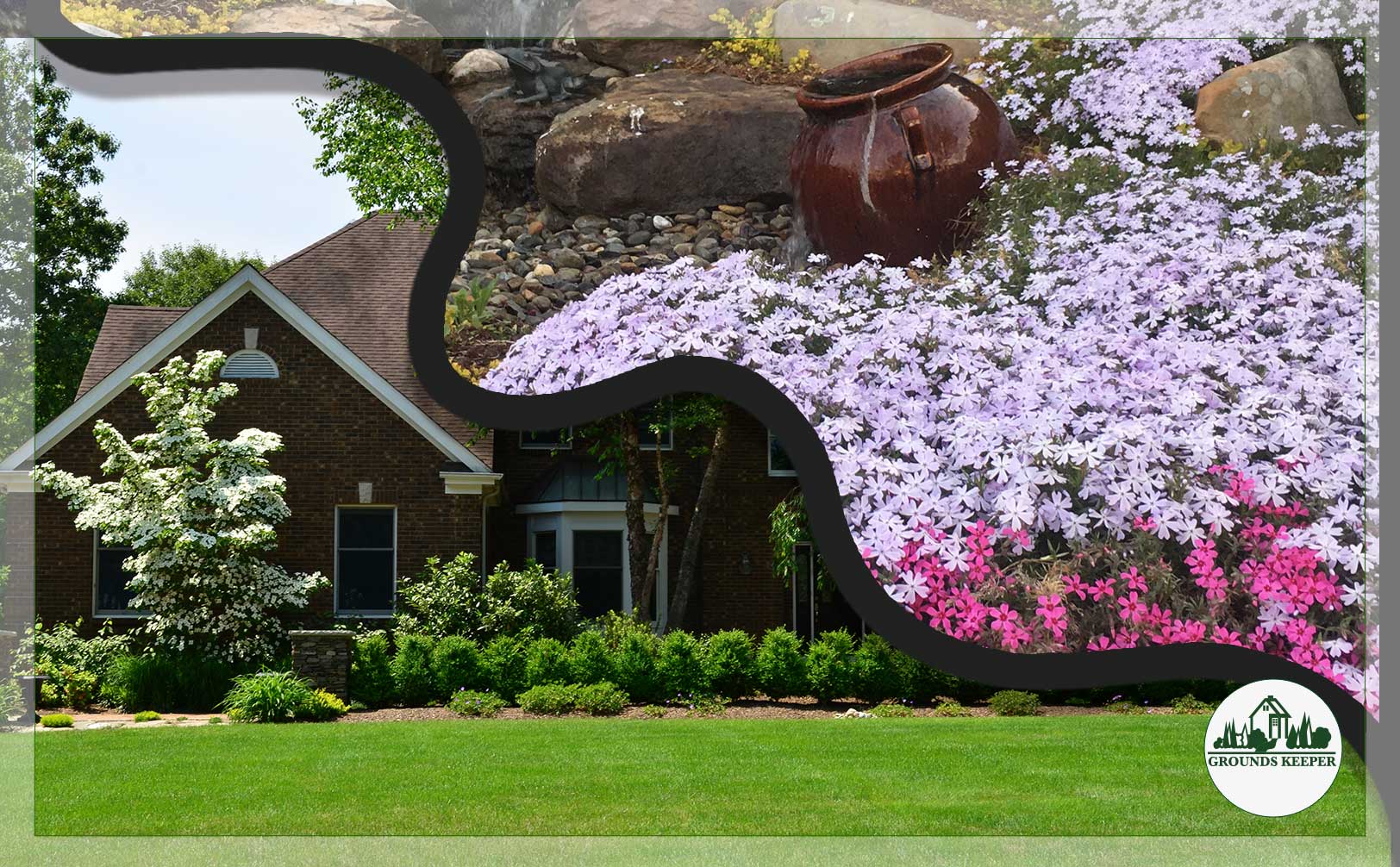
There’s a quiet battle happening in yards across New Jersey, and it’s been brewing for longer than you might think. On one side: the classic grass lawn, neat and familiar, the undisputed champion of suburban yards for generations. On the other: groundcover, low-growing, wildly varied, and increasingly unwilling to stay in its lane.
Both have their loyalists. Both have their strengths. And both have a genuine argument for why they belong in your yard.
The grass lawn has been the default for so long that most of us never stopped to ask whether it was actually the right choice, or just the one everyone made. Groundcover, meanwhile, has been doing impressive things in gardens where grass was never going to win anyway. So which one deserves a place in your yard? And do you actually have to pick a side? Let’s find out.
 What Are We Actually Talking About?
Before we get into the great debate, let’s make sure we’re on the same page.
A grass lawn is exactly what it sounds like: a carpet of turf, kept trimmed, green, and (occasionally!) clover-free. It wants frequent mowing and watering, with the occasional fertilizer and herbicide. It’s the classic suburban standard, the backdrop for backyard barbecues and kids’ soccer games.
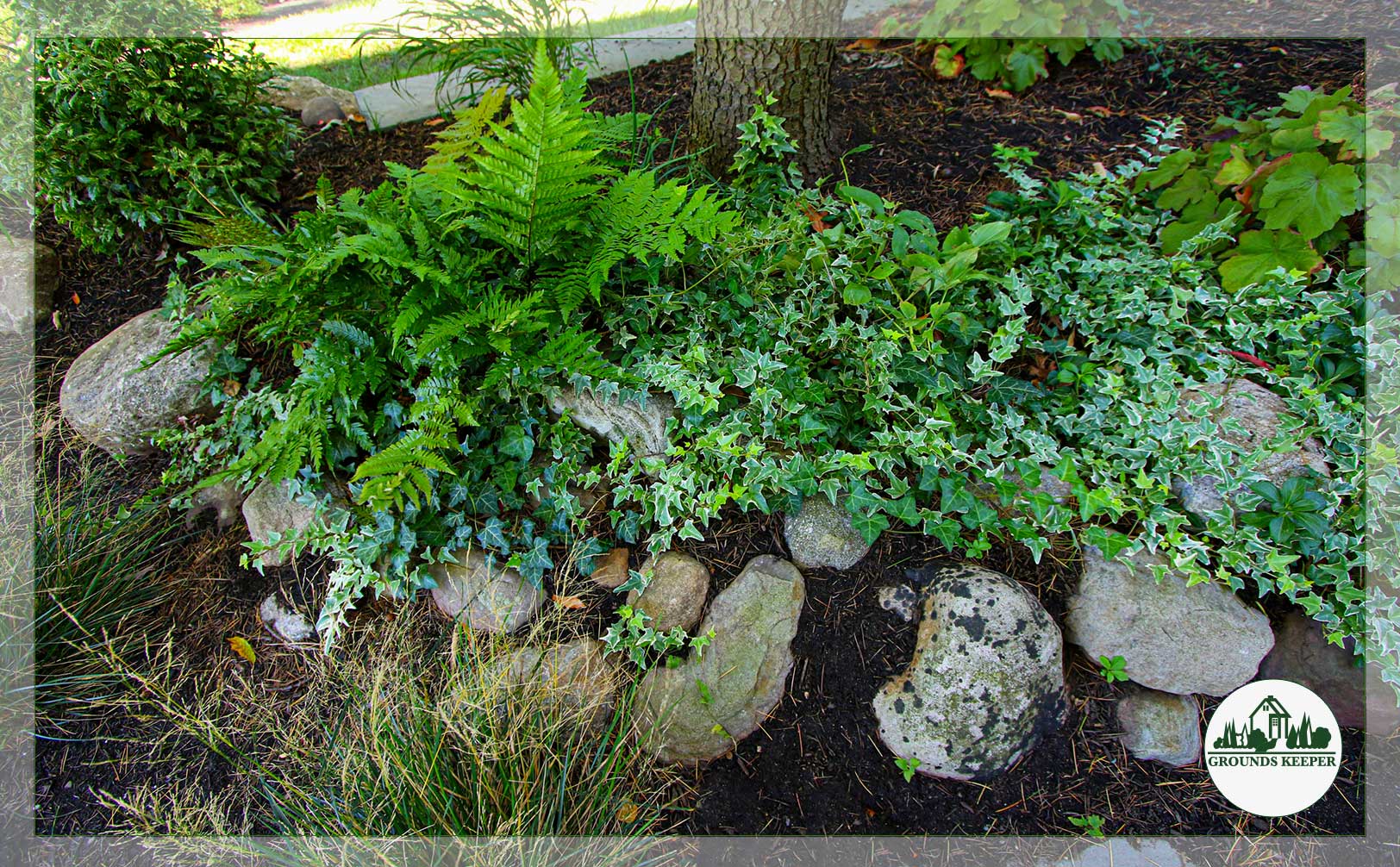
Groundcover is a broader category. It refers to low-growing plants that spread across the ground to form a dense, living surface. Think creeping thyme that releases a soft herbal scent when you brush past it, moss that turns a shady corner into a carpet of green, and native ferns that unfurl in spring. Groundcover can be flowering or foliage-focused, fragrant or subtle, and it comes in enough variety to fit just about anywhere.
They’re two very different contenders for space in your yard. How do you decide which one wins? Let the battle begin!
 How Much Sun Does Your Yard Get?
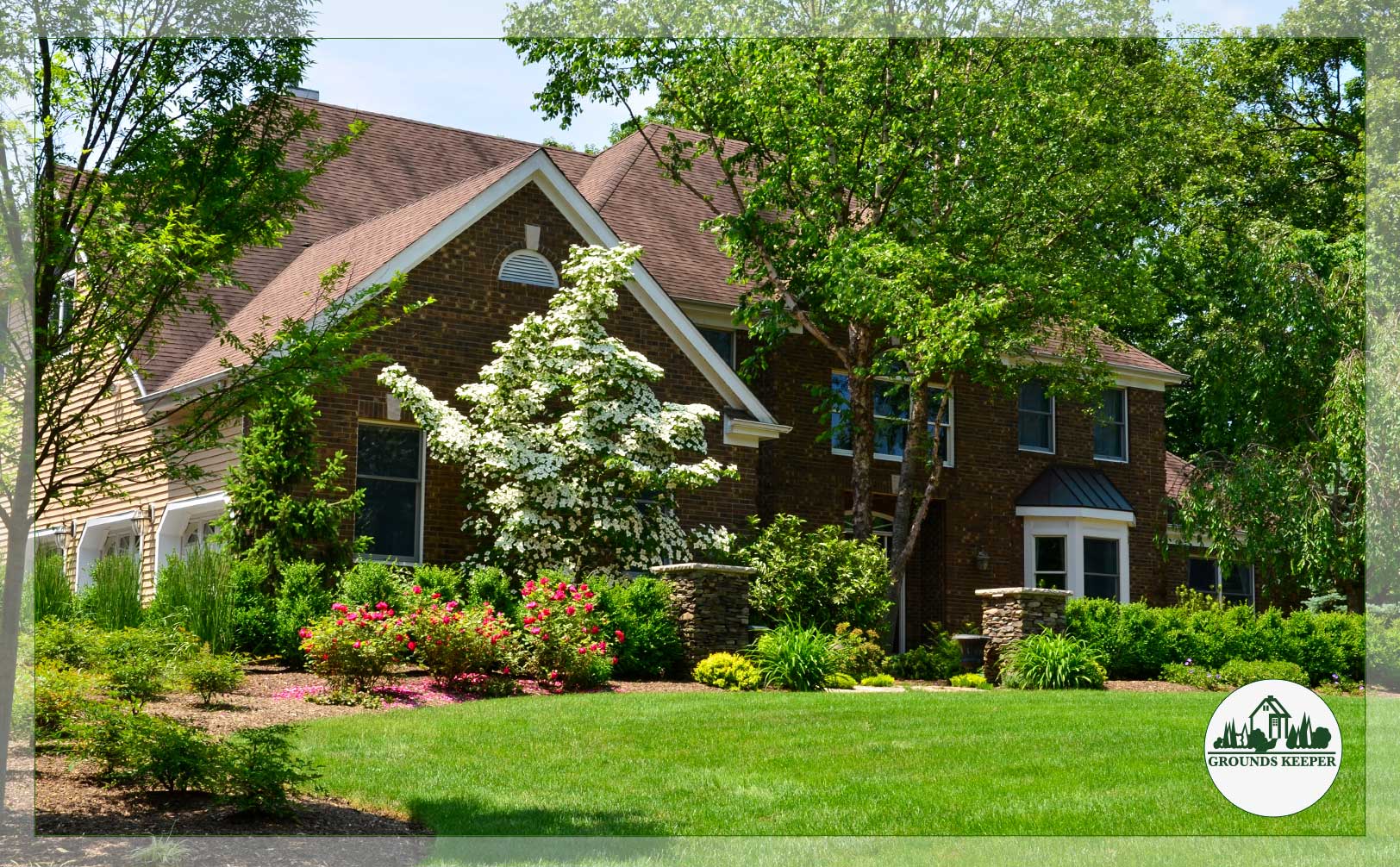
Grass loves full sun. It thrives in open, even spaces where it gets plenty of light and a mower can do its thing without navigating around tree roots, slopes, or awkward corners. If that sounds like your yard, a well-maintained lawn is beautiful to behold. Lush, clean, and open in a way that’s hard to replicate.
Live your best outdoor life
Wondering how to balance grass and groundcover in your yard? Let’s talk!
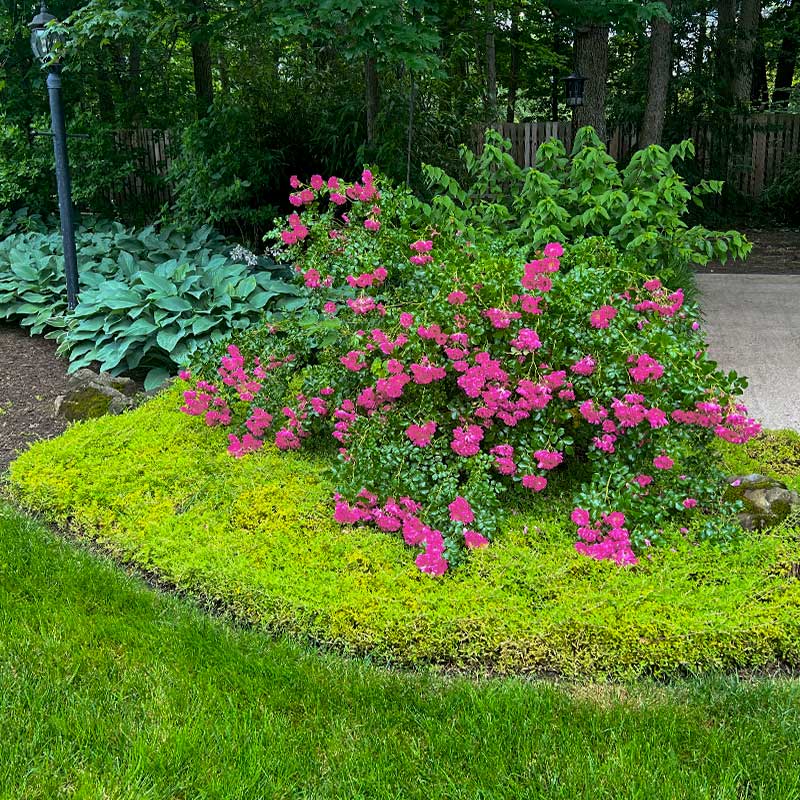
But most yards aren’t that simple. There’s usually at least one spot where grass struggles: a dense patch of shade under a tree where it grows thin and patchy no matter what you do, a narrow strip beside the driveway that the mower can barely reach, a slope that’s muddy in April and scorched by July. In those spots, grass isn’t really a design choice. It’s just a habit.
That’s where groundcover earns its place. Ajuga fills a shady corner with deep purple foliage that looks almost architectural. Creeping phlox tumbles over a rocky slope in a riot of spring color. Native wild ginger spreads steadily under a tree canopy, turning a problem area into one of the most interesting parts of your yard. Where grass gives up, groundcover gets to work.
 What Does Your Yard Look Like In January?
Go ahead, picture it. If your answer is “a lot of brown and not much else,” you’re not alone. A conventional grass lawn is at its best from late spring through early fall. It greens up beautifully when temperatures rise, but it also goes dormant, browns out, and occasionally throws a full-scale tantrum in the form of grubs, bare patches, or weeds that appear for no discernible reason.
Groundcover, particularly native varieties, tends to be more seasonally interesting across the board. Many groundcovers bloom in early spring before most of your other plants have even gotten started. Some develop rich fall color. A few, like certain sedums and native sedges, hold their shape through winter, giving your yard something to look at when everything else has gone quiet. In January, a yard with thoughtful groundcover still has texture, form, and life. A yard with only grass has a lot of waiting to do.

Feeling inspired? Sign up to get more delivered to your inbox!
There’s also a sensory dimension that grass rarely matches. Creeping thyme releases fragrance underfoot. Native violets attract early pollinators before the garden really gets going. Moss creates a texture that’s almost impossibly soft and invites you to slow down and actually notice your yard. A grass lawn is a backdrop. Well-chosen groundcover is part of the experience in every season.
 How Much Time Do You Want To Spend On Maintenance?
A lawn can ask a lot of you. Weekly mowing, watering during dry stretches, troubleshooting whatever is threatening to turn your turf brown this summer. For some people, that routine is genuinely satisfying.
Puttering around the yard on a Saturday morning, coffee in hand, is its own kind of pleasure. Pop on some headphones, tune out the kids, and suddenly chores become some much-needed “me time.”
But for others, lawn maintenance is a chore that consumes every weekend from May to October, another item on a never-ending to-do list. If that sounds familiar, groundcover is worth a look.
Most varieties, once established, ask very little of you. They spread on their own, suppress weeds by crowding them out, and don’t need mowing. Native groundcovers are especially low-effort because they’ve evolved for exactly this climate and soil. They don’t need coddling. They just need to be planted thoughtfully and given a little time to settle in.
That first season does require some patience. Groundcover fills in gradually, and you may need to do some light weeding while it gets established. But the long-term payoff in reduced maintenance is real.
 How Does Your Family Use Your Yard?
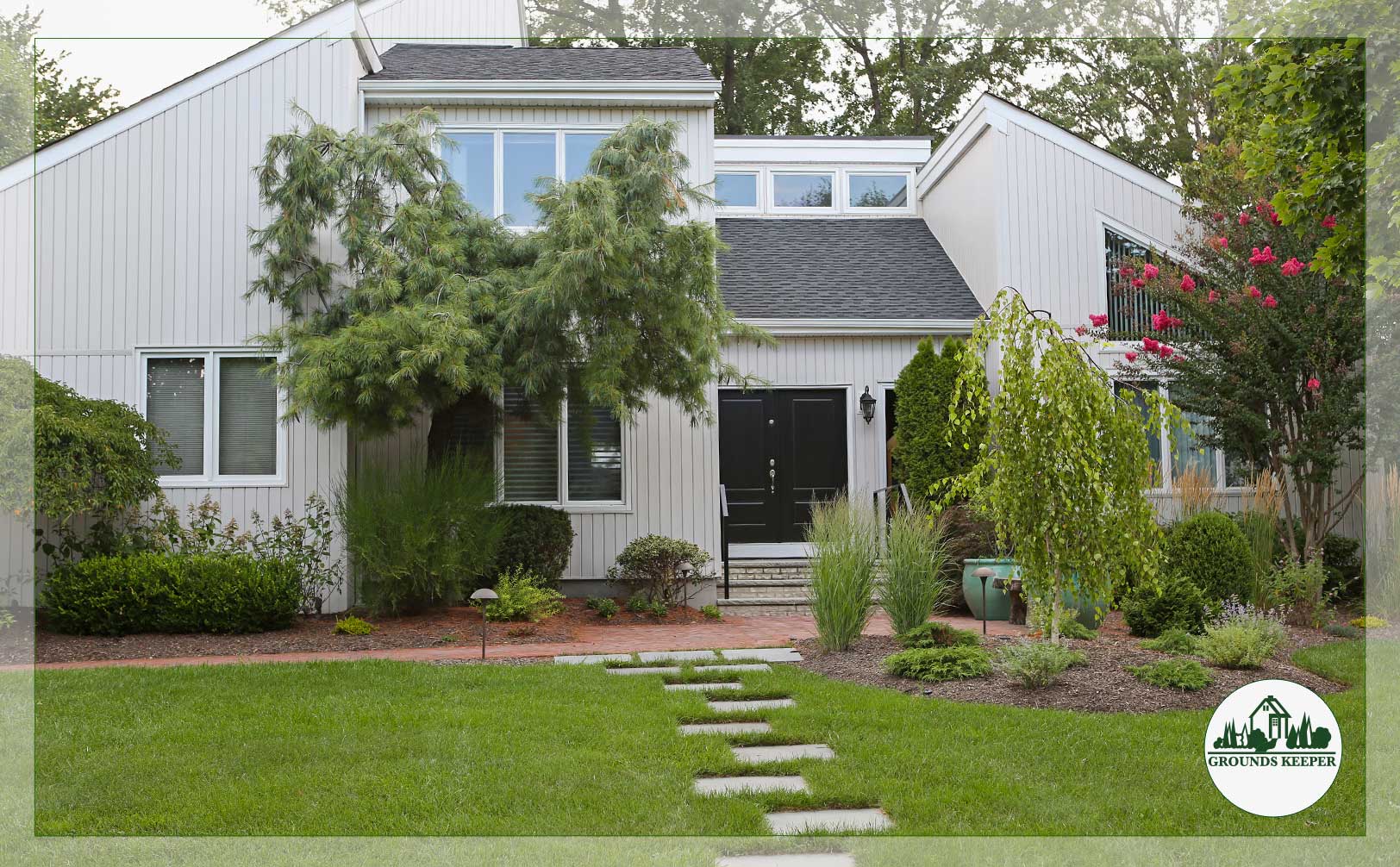
This one is worth being honest about. If you have kids who treat the backyard like a personal soccer stadium, or a dog who has strong opinions about where to sprint at full speed, grass has the advantage. It’s durable, it recovers reasonably well from heavy use, and it gives everyone, two-legged and four-legged alike, a surface that’s forgiving, comfortable, and just plain fun to be on.
Groundcover, for all its charm, isn’t really designed for that kind of action. Most varieties don’t hold up well under repeated foot traffic, and a well-loved groundcover planting in a high-activity area will start to show it pretty quickly. A backyard that doubles as a playing field needs turf.
 Who Do You Want To Share Your Yard With?
A conventional grass lawn may be neat and green, but ecologically speaking, it doesn’t offer much in the way of food or habitat for pollinators, birds, or beneficial insects. It’s the landscape equivalent of a waiting room: fine to pass through, but nobody’s making a home there.
Groundcover, especially native plantings, changes that. Suddenly, your yard becomes a neighborhood. Native groundcovers provide nectar for early pollinators when almost nothing else is blooming yet. They offer shelter and nesting material for beneficial insects. They attract the kinds of birds that eat grubs and aphids, which is good news for the rest of your garden.

Plant the right things and you’ll start noticing visitors you’ve never seen before: unique butterfly species, native bees, the occasional delighted goldfinch.
Even a yard that feels pretty plain right now can become something that buzzes, flutters, and sings all year.
 Do You Really Have To Choose?
Here’s the part where we let you off the hook: no, you really don’t.
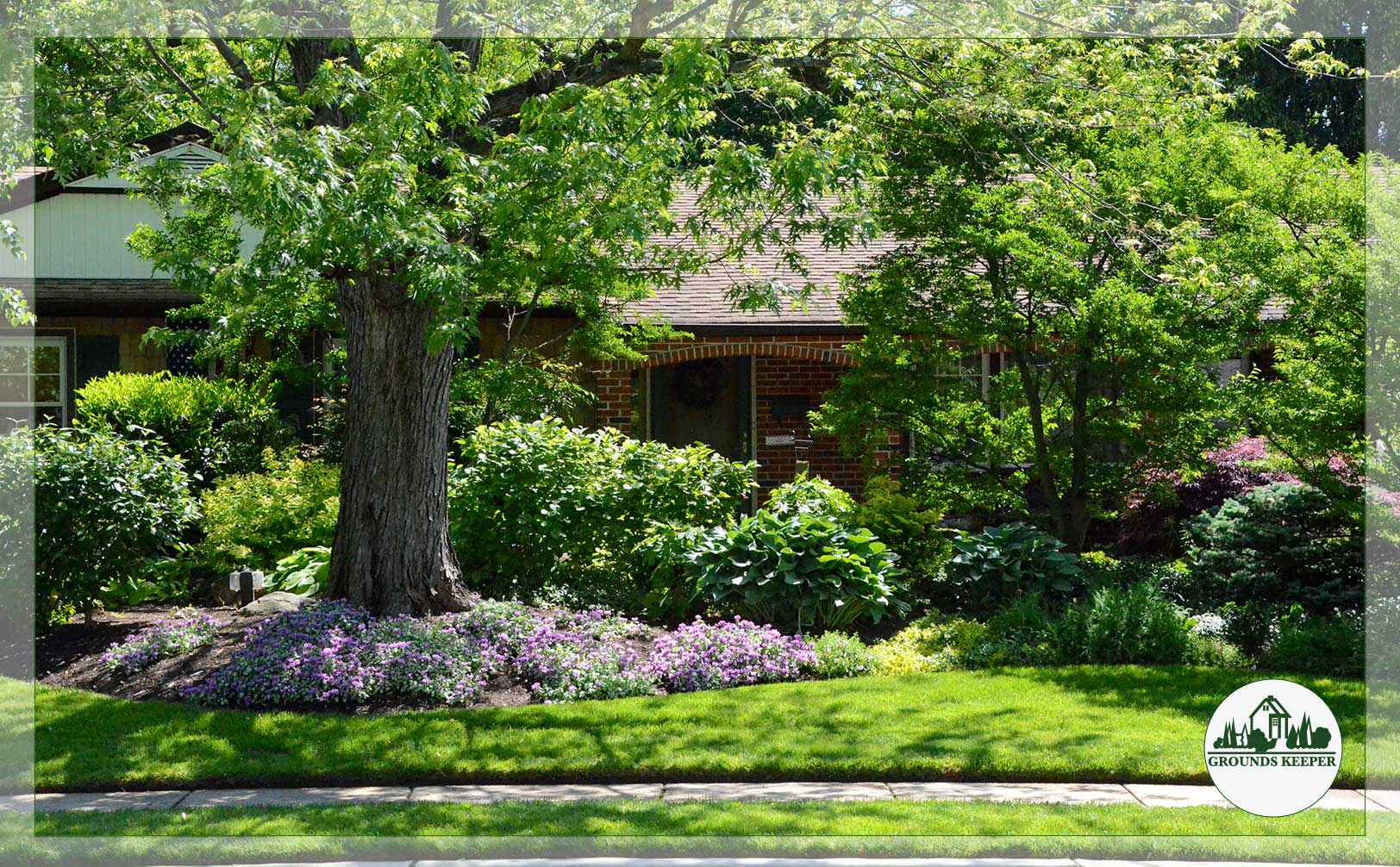
The most interesting yards aren’t entirely grass or entirely groundcover. They’re a thoughtful mix of both, each used where it makes the most sense.
A central lawn area gives you open space for gathering, playing, or simply enjoying the view. Groundcover fills in the edges, the shady spots, the slopes, and the corners where grass was never really thriving anyway.
Think of it less as a choice and more as a design conversation. Where does grass earn its place in your yard? Where has it been hanging on out of habit, in a spot that could be transformed by something wilder, more interesting, and more beautiful?
Those are the questions that lead to a yard that feels designed rather than simply maintained.
We love helping people work through exactly this kind of question. Whether you’re ready to replace a struggling lawn area with something stunning or you simply want to talk through what’s possible in your space, we’re here for it.
Book a consultation and let’s start the conversation. Your yard has more potential than you might think, and we can’t wait to help you explore it.