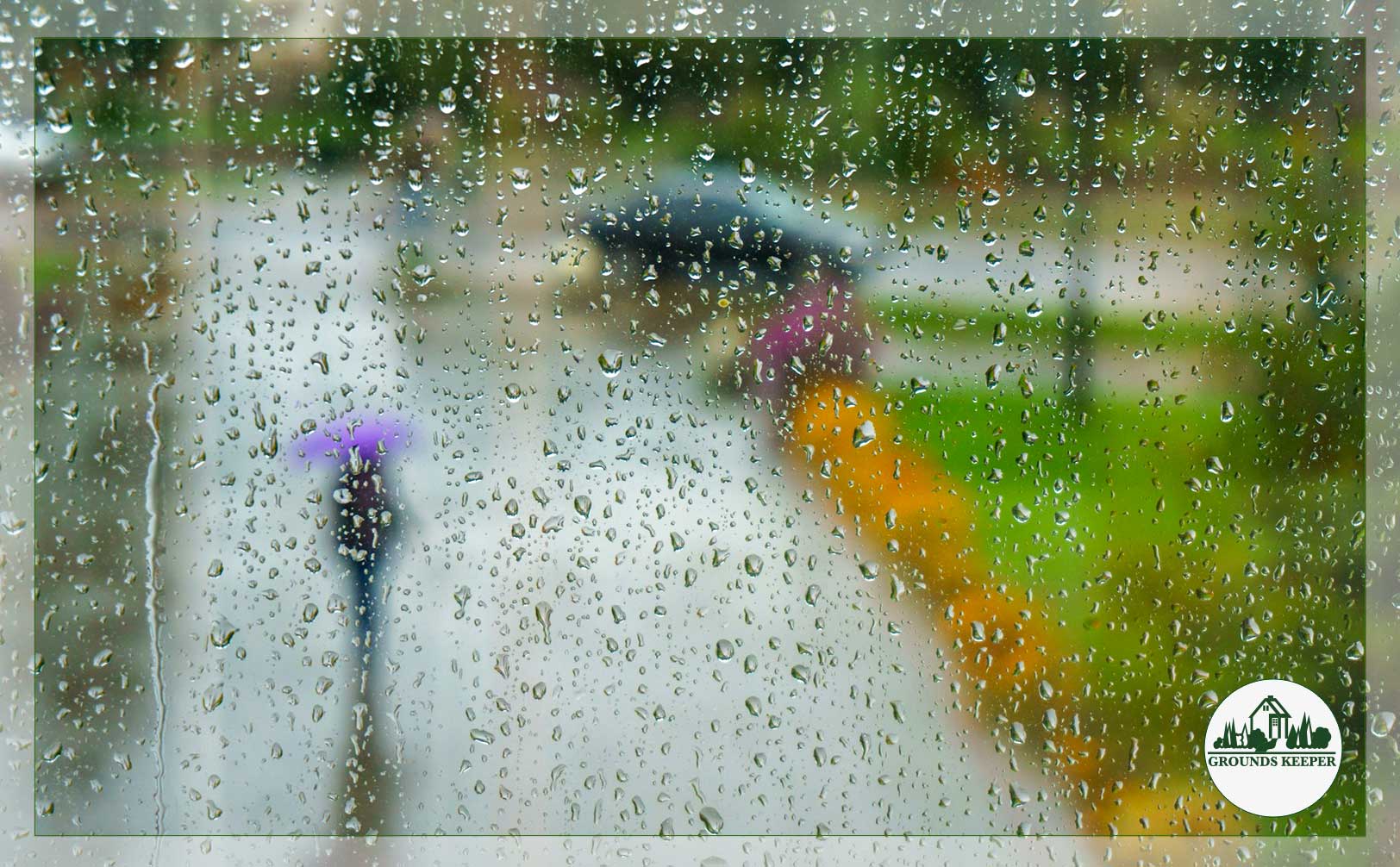
It starts quietly.
The first note is a single drop tapping against a leaf. Then another, and another, until the air fills with a steady rhythm. The light dims. Colors deepen. Edges blur. Just like that, the landscape changes, not only in how it looks, but in how it feels to be in it.
Most people experience rain as an interruption. Plans get paused. Windows get closed. Chair cushions get snatched up, and furniture arranged for sunny days is quickly covered and put away.
But step outside, just for a moment, and listen.
Rain does something remarkable to a landscape. It gives it a voice.
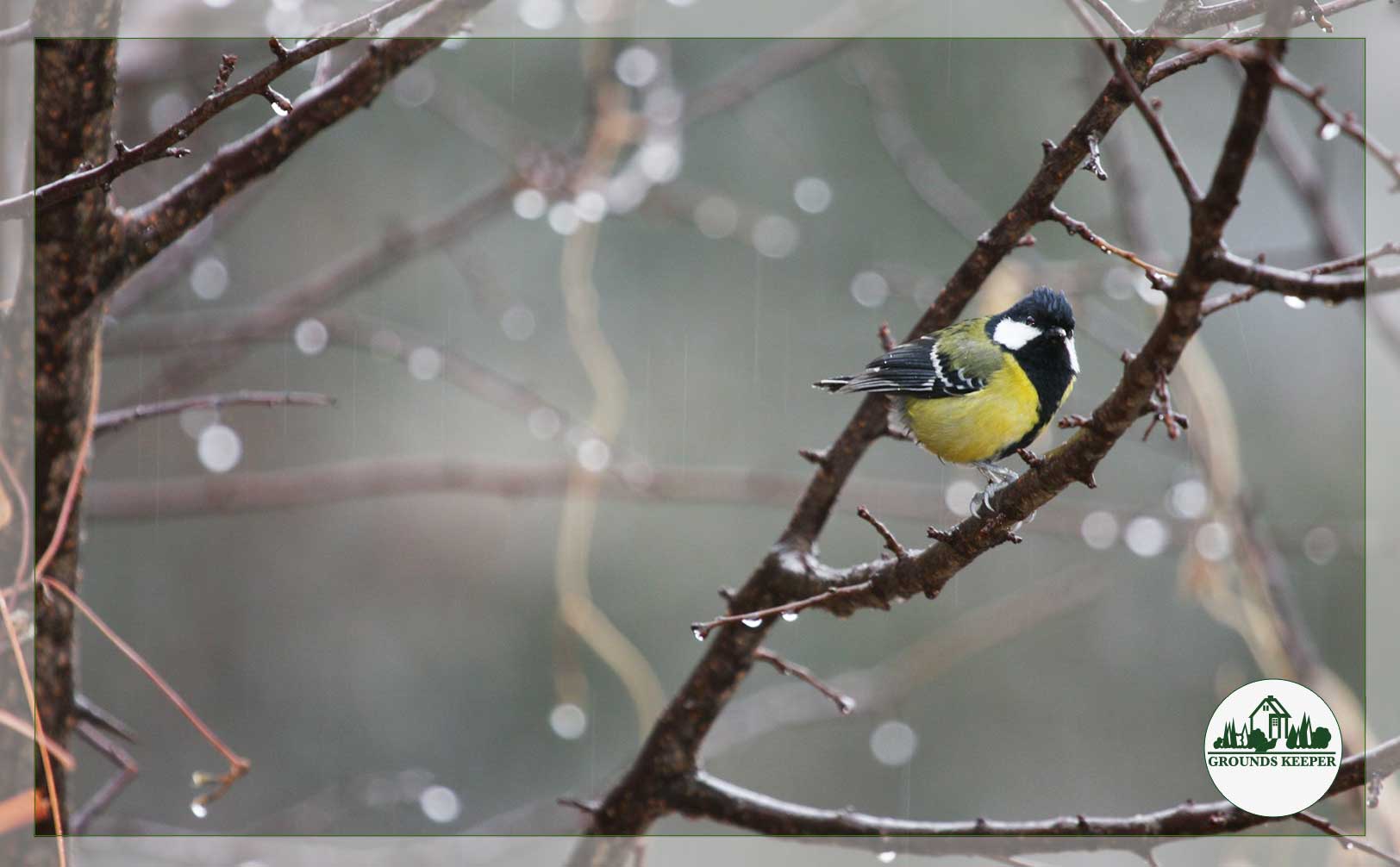 Rain As Composer, Landscape As Instrument
Rain on its own is simple. It falls. It lands. It disappears.
What transforms it is where it lands.
A naturalistic landscape, with its variations in dimensions, textures, and organic shapes, becomes an instrument. Every surface, every plant, every material is tuned a little differently. The same rain that falls evenly from the sky becomes a symphony on the ground.
It’s a reminder that a landscape isn’t just something you look at. It’s something you experience. When the weather shifts, it reveals a part of itself that’s always been there, just waiting to be noticed.
 The Soft Layer
At the edges of the garden, the sound begins as a whisper.
Ornamental grasses catch the rain in fronds and strands, breaking each drop into tiny beads of mist. The result is a soft hush that settles over the space.
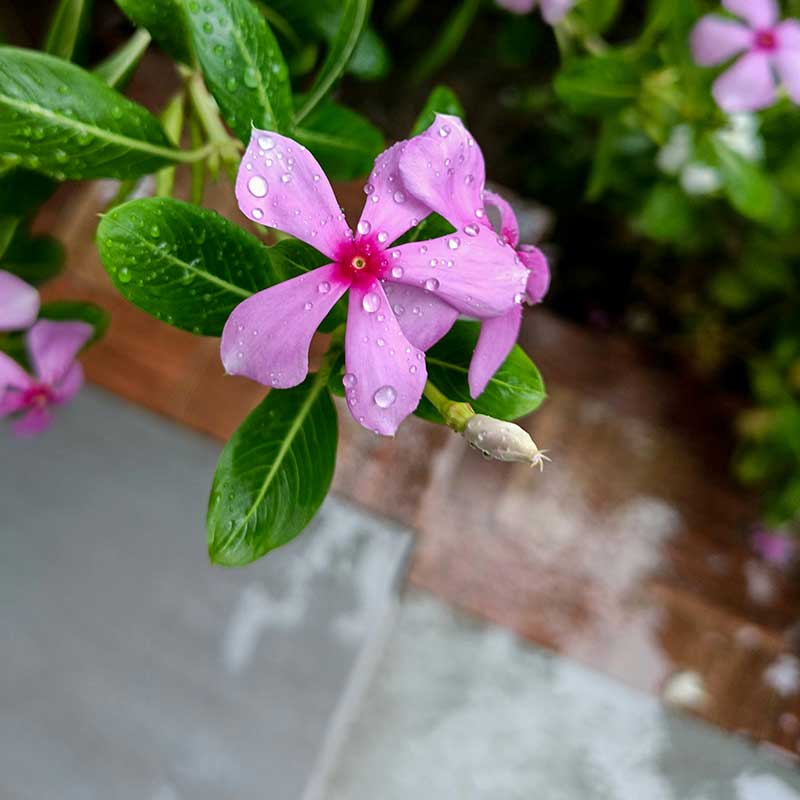
Broad leaves respond differently. Hydrangea, hosta, and the low canopy of small trees gather water, hold it for a moment, then release it in intervals. Not a pattern, but a gentle syncopation that makes the garden feel alive.
Live your best outdoor life
Wondering what tune your yard would sing if you let it? Book a consultation and let’s turn your landscape into a sweet serenade!
This is the background layer. The part you don’t always notice at first, but would miss immediately if it were gone. It softens everything and gives the space a sense of calm that feels natural rather than designed.
 The Bright Notes
Every composition needs contrast.
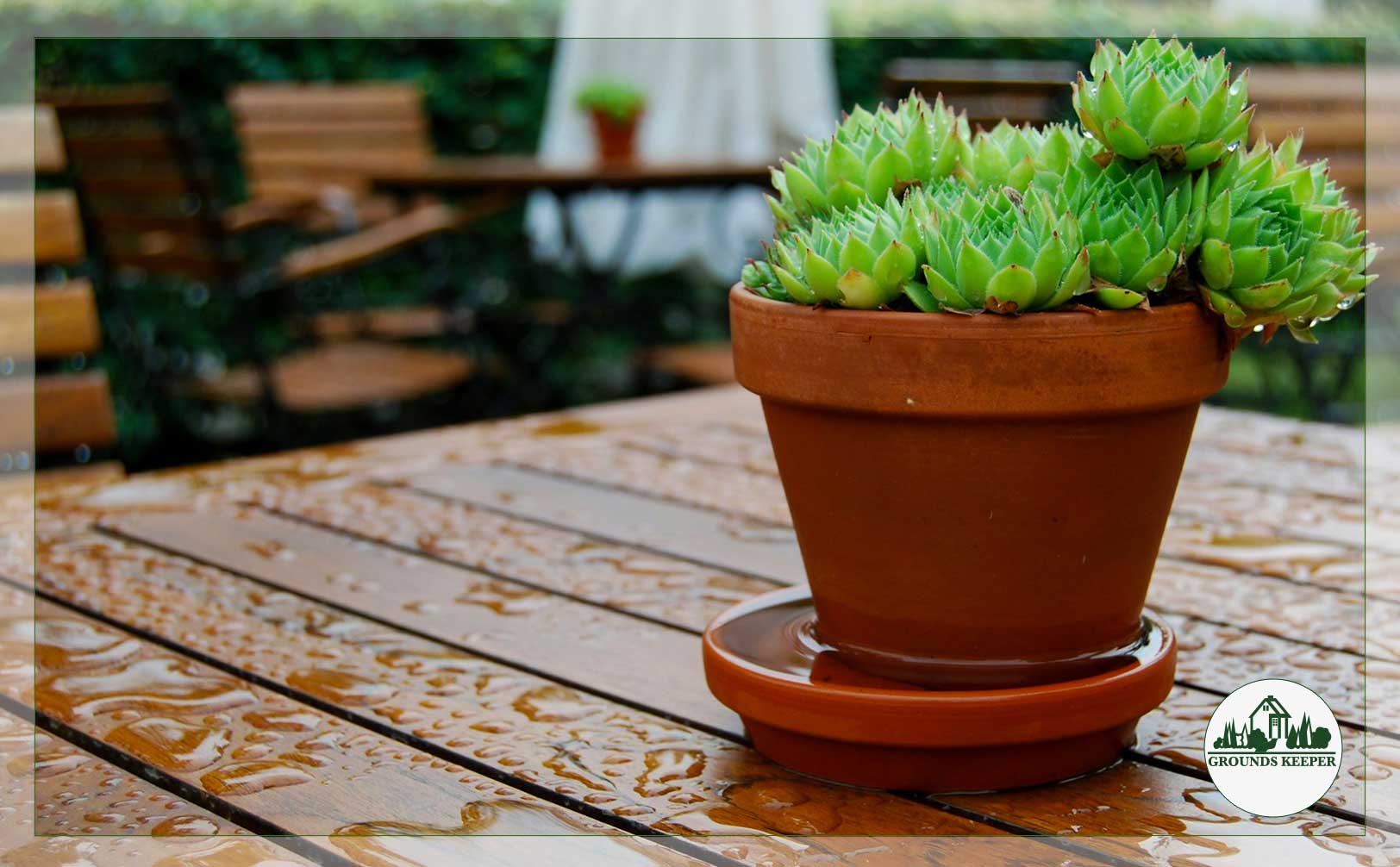
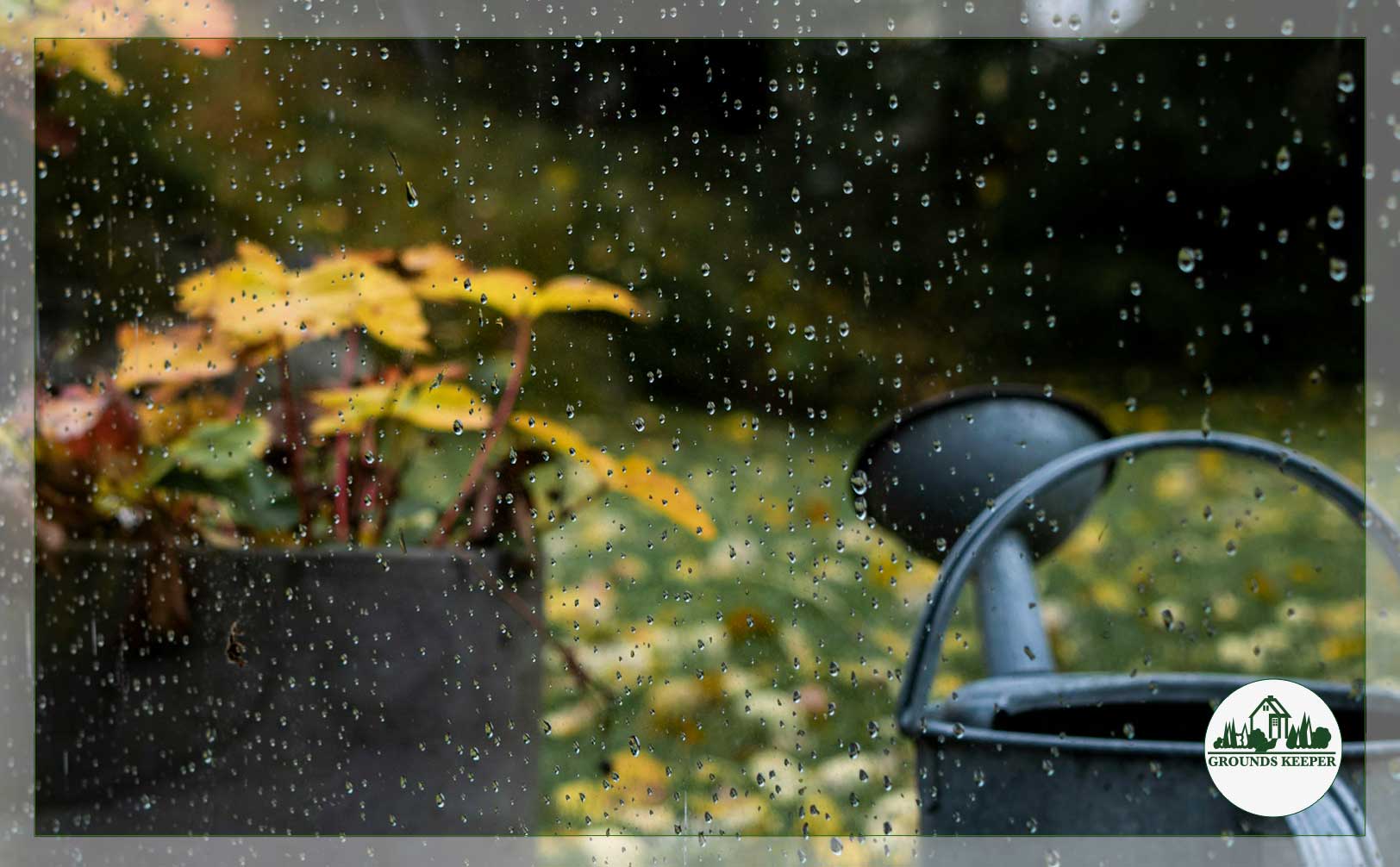
In a naturalistic space, myriad surfaces catch the rain just a little differently. The stone edge of a garden sculpture. The smooth curve of a planter. A metal downspout guiding water to a rain barrel.
This is where the tone sharpens.
A light ping, a quick, bright note cuts through the backdrop for just a second. Not constant or overwhelming, just enough to create variation and capture attention.
Used intentionally, these elements add personality. They bring their own sense of movement. With the right balance, they feel less like noise and more like a light susurration or an underlying chord.
 The Grounding Rhythm
Beneath it all, something steadier is happening, the heartbeat of a rainy day.
Rain meeting stone has a different voice entirely. It doesn’t whisper. It doesn’t ring. It lands with weight.
Bluestone steps, worn at the edges. A flagstone path set into the earth. Even gravel, shifting underfoot. Each produces a more grounded response, whether a muted tap, a soft thud, or a steady patter that anchors everything else.
This is the rhythm section. The part that holds the composition together.
Follow us on Instagram for more lifestyle ideas and inspiration!

In a naturalistic design, these materials are textured, irregular, and full of variation. Water doesn’t strike them uniformly. It finds the dips, the edges, and the imperfections, creating a sound that feels organic rather than repetitive.
It’s not just something you hear, it’s something you feel. A sense of weight and of being connected to something solid, even as the weather moves around you.
 When Rain Meets Water
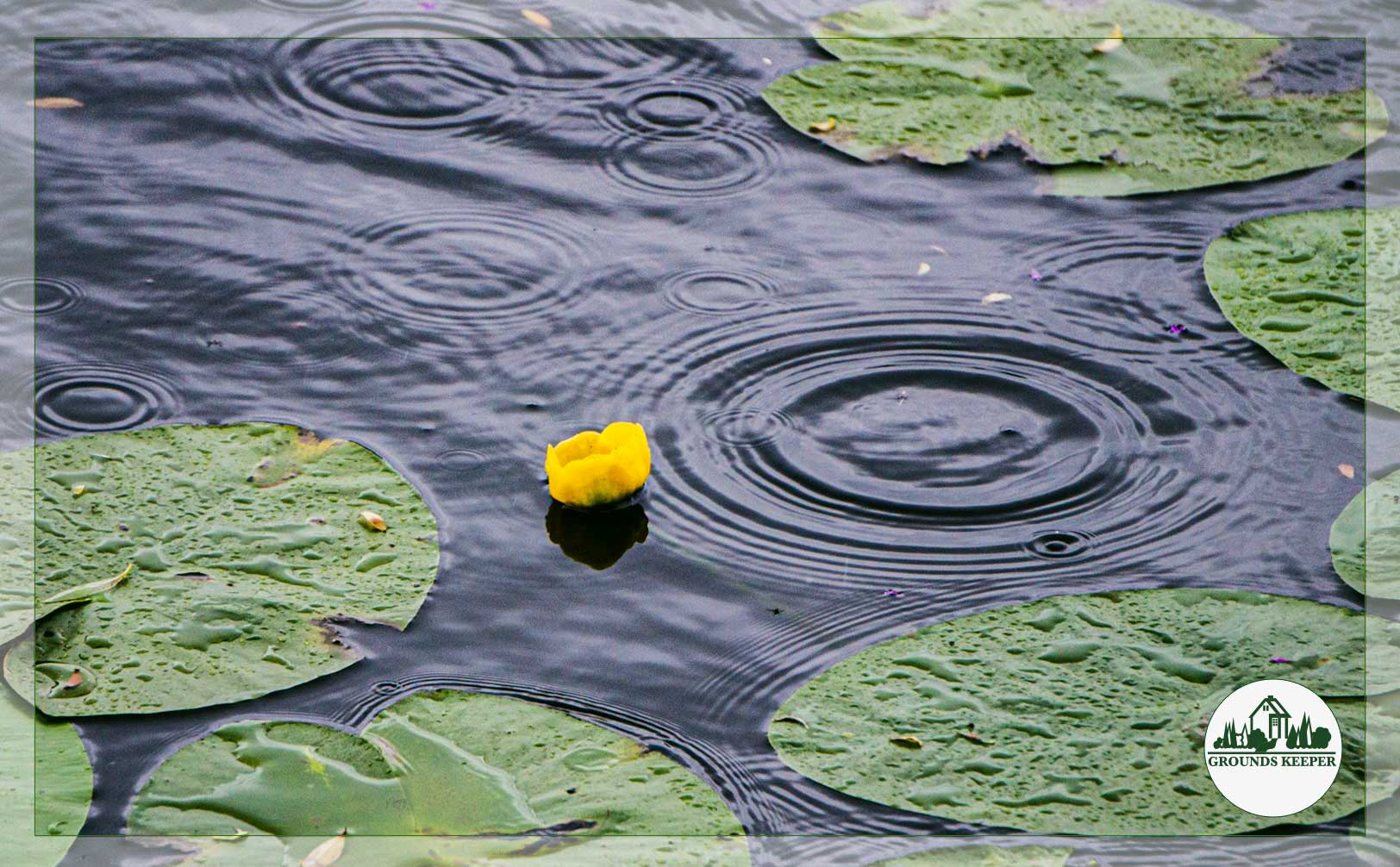
When water meets water, something subtle and magical happens.
Where there is already water moving through the landscape, whether bubbling from a stone column, cascading from a waterfall, or flowing in a spill bowl, rain doesn’t interrupt. It blends.
On a clear day, these features bring their own steady sound. But in the rain, they become part of the harmony. The line between what is designed and what is falling from the sky begins to disappear.
The result is a layered, ambient sound that fills the space. There’s depth and a sense of continuity that ties everything together.
In a well-designed landscape, these elements don’t compete with the rain. They adapt to it and welcome it, becoming part of a larger orchestral whole.
 The Spaces Between
Not every part of the landscape should sound the same.
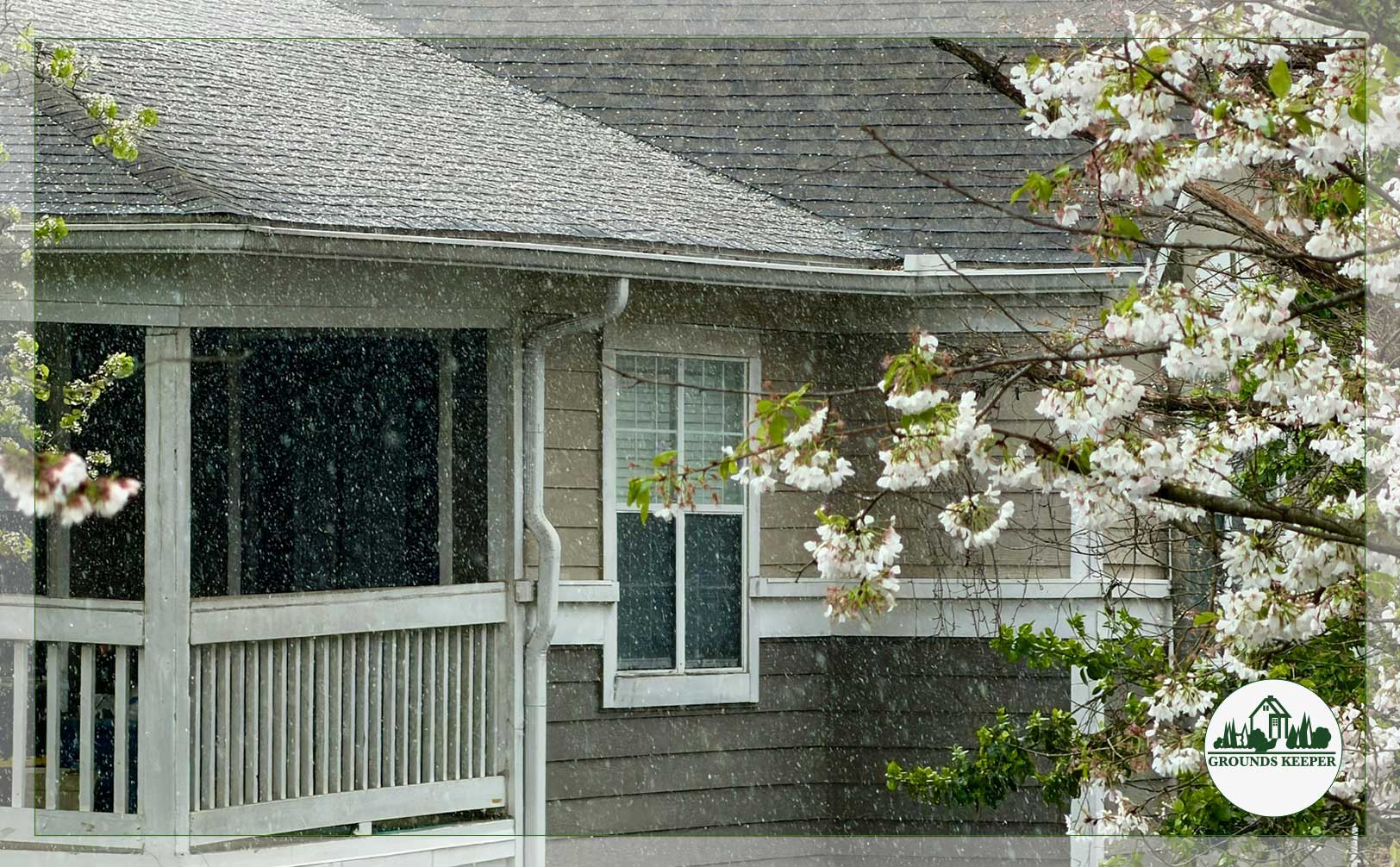
Step under a covered porch, a pergola, or even the canopy of a well-placed tree, and the experience changes. The direct impact of rain fades, replaced by something more subtle and filtered.
Now the garden can be heard as a whole. Sounds carry from beyond, softened by layers of planting and structure.
Enjoying these ideas? Sign up to get more delivered to your inbox! (Plus offers and sales from our showroom!)

There are pauses here, too. Moments where the rhythm slows, where a single drip echoes longer than expected. Where the quieter moments become more noticeable.
These transitions create contrast and movement. They’re not just about being in the rain, but about how you experience it from different vantage points.
Designing For Listening
It’s easy to think of landscapes as visual compositions. Lines, colors, forms, and seasonal change usually get the spotlight.
But sound is always there, whether you actively notice it or not.
Naturalistic landscapes already have everything they need for a rich sensory experience. The key is recognizing that every element, from stone to wood, leaf to frond, patio to pond, contributes more than just visual appeal.
Rain reveals what’s been there all along.
It highlights how a space responds to changing conditions across weather, time, and seasons. The most beautiful landscapes aren’t just designed to look good in ideal weather. They’re designed to offer something unique, no matter how you experience it.
A Landscape That Plays In The Rain
The rain is steady now.
What began as a single note has become layered and immersive. The hush of grasses. The rhythm of stone. The occasional bright note, rising then falling. A tempo change here, a crescendo there.
It’s alive in a way that a dry landscape can never quite be.
And when the rain eventually passes, when the last drop falls and the air begins to clear, the memory of sound remains. Of a landscape that didn’t just sit quietly in the background.
It played.
If you’re curious how your own space could come to life this way, let’s talk. The next step isn’t just to look at your landscape differently, but to listen. When you’re ready, we’re here to help you experience it.