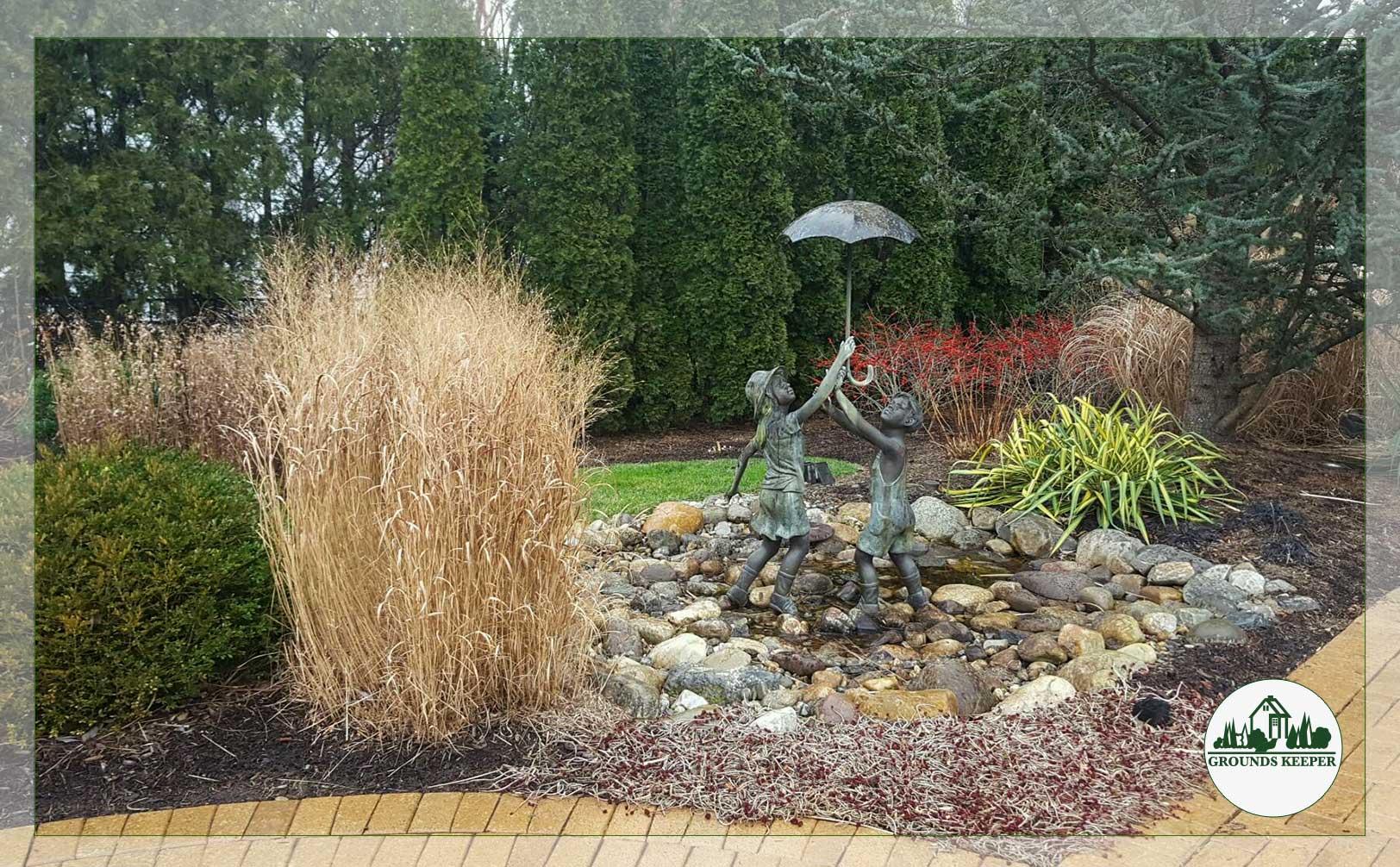
Early March can be moody.
The sky is low and gray. The ground stays damp for days at a time (and that’s only where you can see it beneath the mountains of leftover snow and sludge). Shoes slurp up mud on your way to the mailbox. Most people glance out the window and think the same thing: YUCK!!
But rain has a way of revealing a surprising beauty.
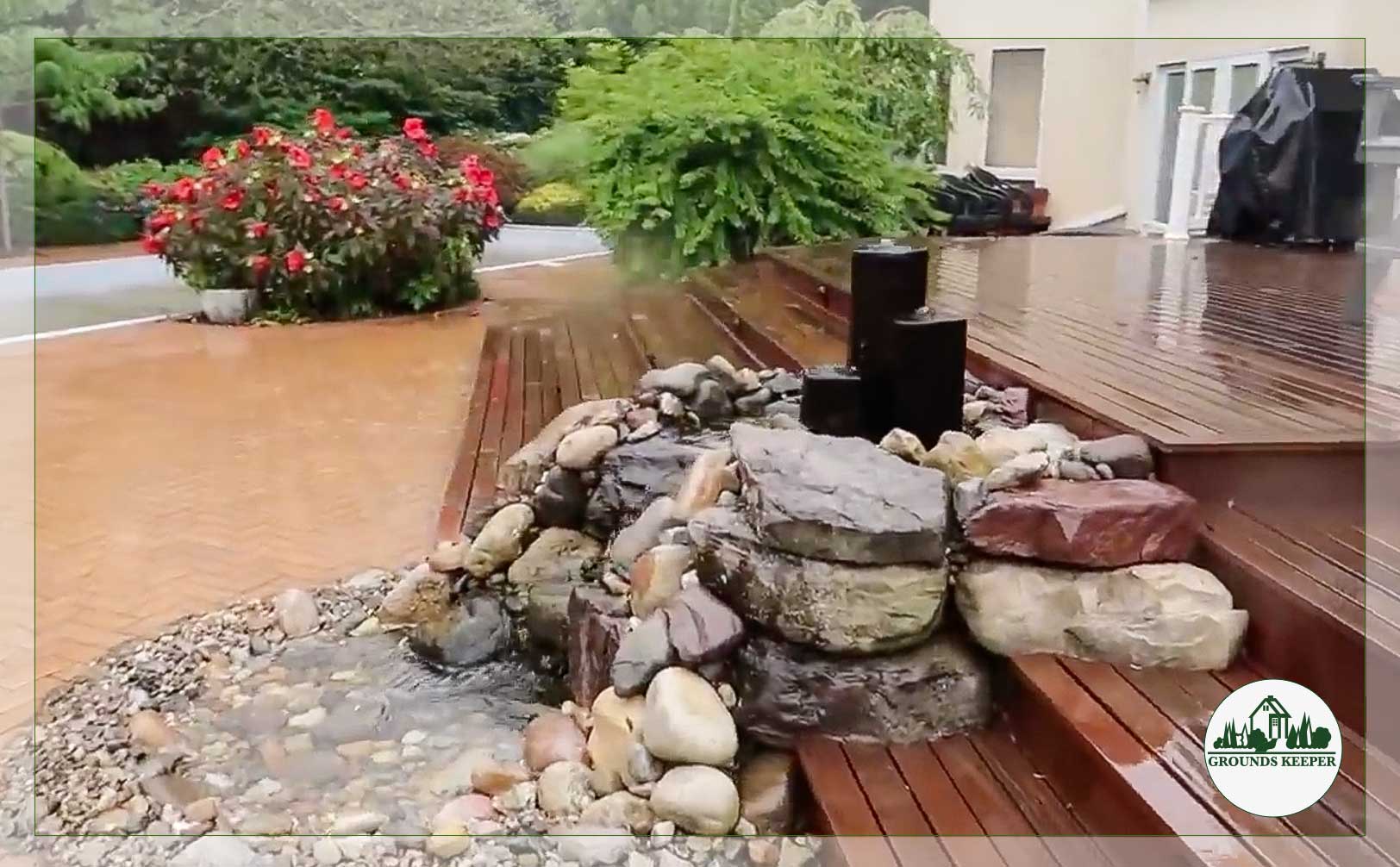
Walk outside during a drizzle and the landscape changes. Stone patios darken to deep charcoal. Brick pathways take on a richer hue. Gravel glistens. The grain of a wooden pergola becomes more pronounced. Moss glows a shade greener than it does on a sunny afternoon.
Rain doesn’t ruin a landscape. It lets the landscape show a different character.
A well-designed outdoor space shouldn’t only look good on a clear summer afternoon. It should feel just as compelling in every kind of weather, including the damp, gray days that are so common in early spring.
Let’s explore some of the ways that your landscape can shine in the rain.
 Surfaces Come Alive
Rain changes the way the world shows up.
Natural stone often deepens in color, highlighting variations in texture and pattern. Gravel paths sparkle, and wood structures show off their grain.
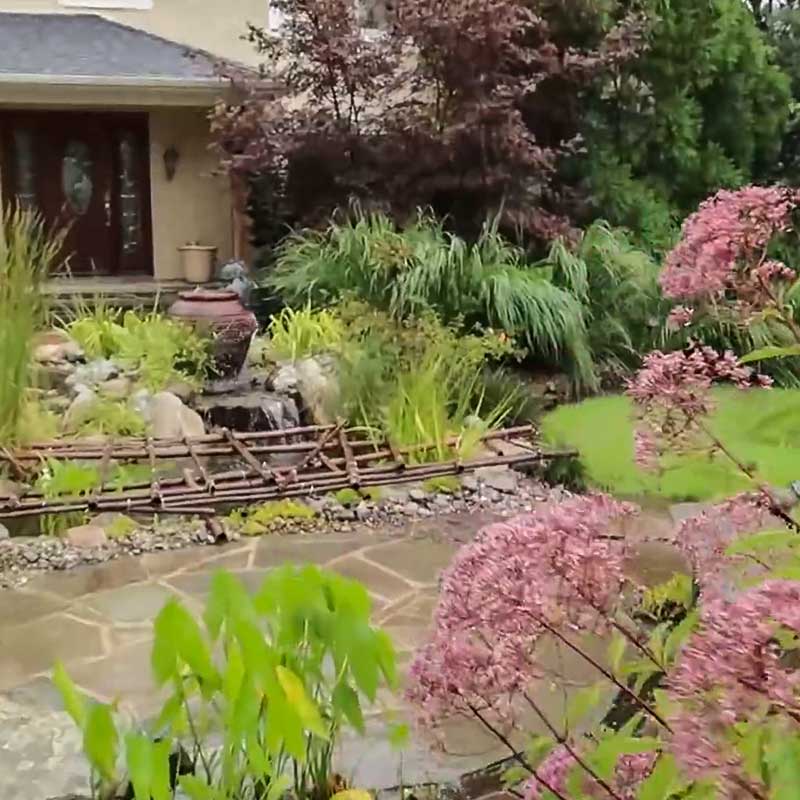
It's time to dance in the rain!
Do you love a rainy night but wish the days were just as enjoyable? Let’s talk!
Rain also brings out the truth in design choices. Smooth concrete can look a little flat once it’s soaked. Poorly installed pavers collect puddles in all the wrong places. Areas without proper drainage quickly turn into muddy splotches. And a walkway that seemed perfectly fine in July can suddenly become the unofficial neighborhood slip-and-slide after a steady rain.
Sunlight flatters everything, but rain is nature’s honesty check. Were these choices intentional and designed to bring beauty to every season, no matter the weather? Or were they conceived merely as fair-weather friends?
Landscapes that are designed with real-world conditions in mind look and behave beautifully year-round. Surfaces shed water when they should, drain where they need to, and still look interesting even when the sky is gray and the ground is wet.
A great landscape that doesn’t just tolerate rain, it sings in it.
 Texture Becomes The Star
Early spring landscapes aren’t overflowing with color yet. Instead, they rely on something more subtle: texture.
Rain happens to be very good at highlighting it.
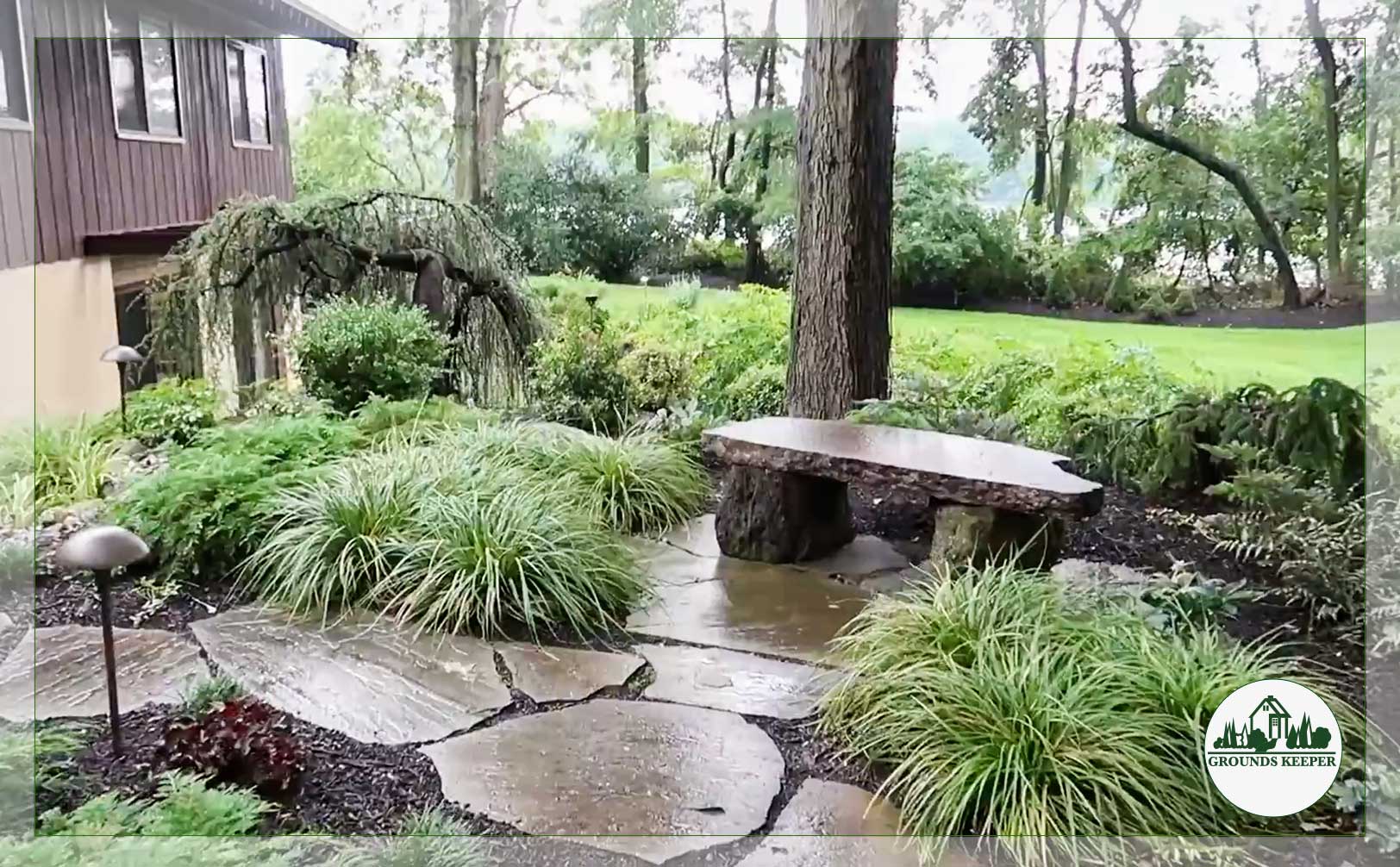
Ornamental grasses bow and shimmer, collecting tiny droplets that catch the reflection of a brooding sky. The bark of a tree suddenly looks more sculptural. Evergreens take on myriad new dimensions as each leaf, branch, and needle holds a trace of water.
Follow us on Instagram for more lifestyle ideas and inspiration!

Many plants evolved surfaces that interact beautifully with water. Instead of soaking in, droplets bead up on leaves like tiny glass marbles.
Even the small details begin to stand out. Seed heads from last season’s perennials hold delicate beads of rain. Moss brightens to an almost electric green. The layers of a garden bed stand out in bas relief when every surface has a little sheen.
Landscapes that include strong shapes, varying heights, interesting bark, ornamental grasses, bold berries, and evergreen plants are visually engaging long before the first spring blooms arrive.
Rain does not dampen a great landscape. It gives it a chance to show off.
 A Different Kind Of Light
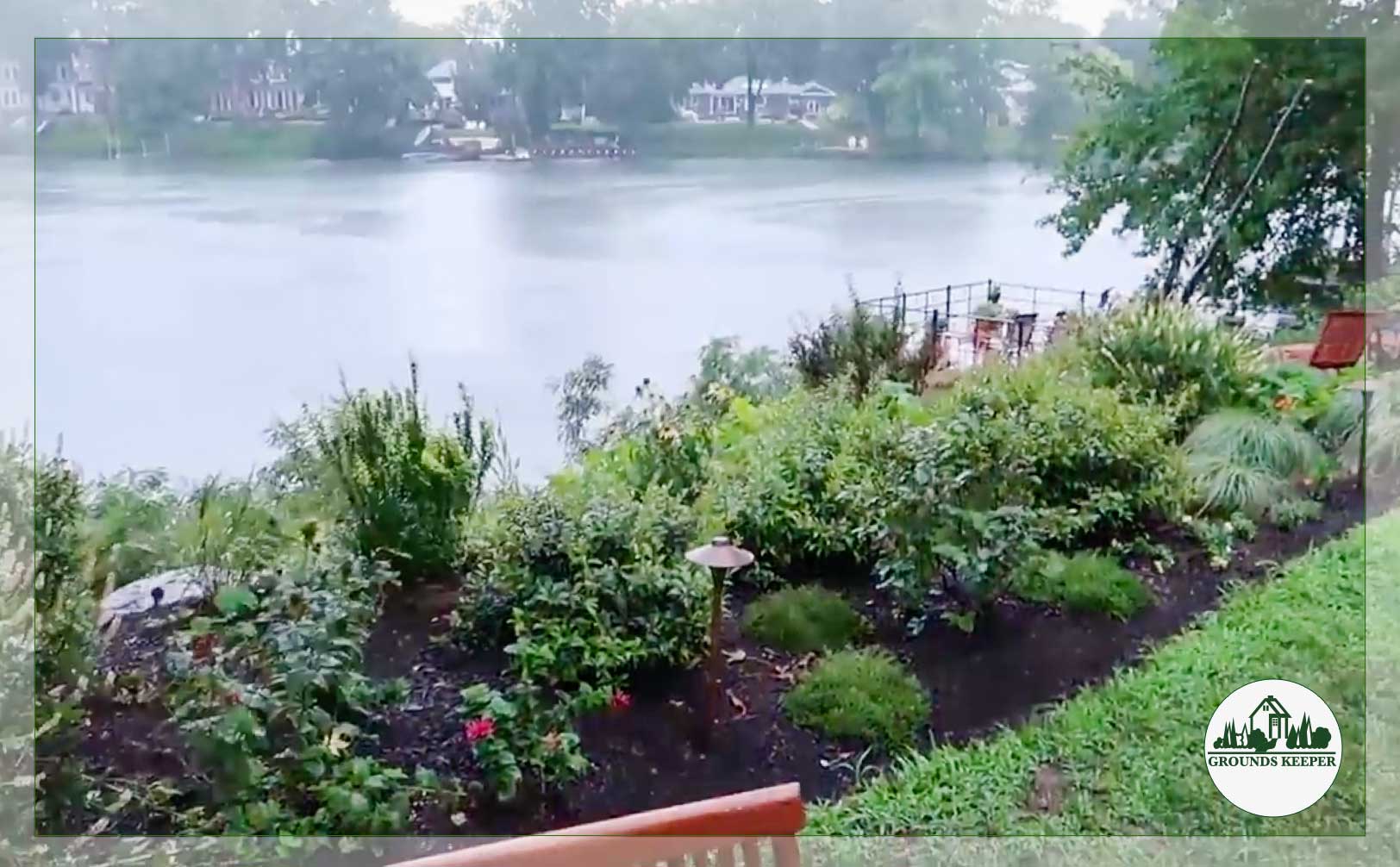
Rain does more than turn everything dim and gray. It brings its own unique kind of light.
On a sunny day, landscapes are defined by strong shadows and bright highlights. Everything feels crisp and high contrast. But during rain, the sky becomes a giant soft pillow of light.
Wet surfaces absorb more light wavelengths than dry ones, so colors look deeper after rain. A bluestone patio that looks like pale ash in the sun suddenly appears boldly gunmetal-gray. The stone didn’t change. The physics of light did.
And wet surfaces reflect just enough light to soften shadows and create a shimmer across patios, paths, and garden beds.
Enjoying these ideas? Sign up to get more delivered to your inbox! (Plus offers and sales from our showroom!)

It’s a calmer kind of beauty. Nothing is shouting for attention, but everything feels richer, layered, and slightly more dramatic than it did in full sun. With thoughtful planning, the rain and the light will do a little design work of their own.
It’s why some landscapes look surprisingly beautiful on gray days, and others just look… wet.
 The Next Time It Rains, Look Around
Rain isn’t an inconvenience. It’s another way to experience your landscape.
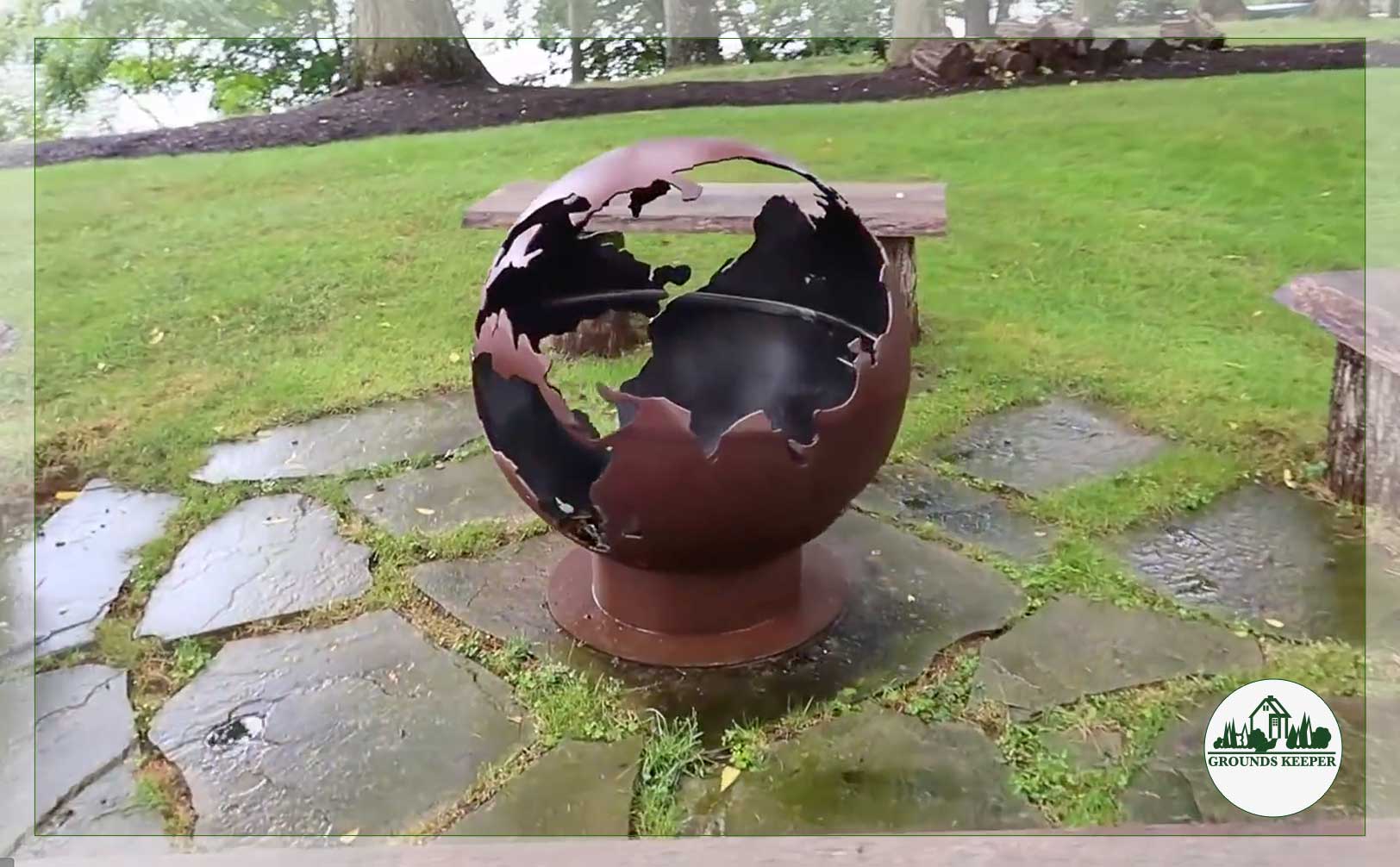
On the next rainy day, step outside for a moment (umbrella optional!) and notice how the stone has darkened and how the gravel along the path seems to sparkle just a little. Look at the leaves and branches in your gardens. Watch how droplets gather along the edges and catch the light.
Notice how water travels across your property. Watch where it collects. Pay attention to which surfaces seem richer and more interesting when they’re wet and which areas look tired and bedraggled.
The best landscapes don’t only shine on bright summer days. They remain just as compelling when the weather turns blustery and wet, even during a month that can be as temperamental as a sulking teenager.
So the next time the forecast calls for a shower, take a walk through your yard and see what changes. You may discover that the rain isn’t hiding your landscape at all.
It’s simply showing it in another light.
And if a rainy afternoon does reveal areas that puddle, fade, or feel less inviting than they could be? It may be a sign that your landscape is ready for a change.
If you’d like a fresh perspective on your outdoor space, we’d be happy to take a walk through it with you and explore ways to bring it to life. Rain or shine.